Beehaw - news publisher
-
Hackers force French supermarket fridges to heat up to 50C in ‘unprecedented’ cyber-attack
submitted by alyaza to newsbeehaw.org
36 points | 13 comments
https://www.theguardian.com/world/2026/oct/12/cyber-attack-defrosts-refrigerators-france-supermarket-chains-intermarche-cooperative-uHackers have forced the temperature of many French supermarket fridges up to 50C overnight, in an “unprecedented” cyber-attack affecting several hundred stores across the country, with fires and food losses reported.
The Paris prosecutor’s office said on Monday the large-scale attack was “affecting connected refrigerators in several major food retailers across France”. Reported damage included “food losses and fires”, it added.
The prime minister, Sébastien Lecornu, instructed France’s national cybersecurity agency ANSSI to investigate, a person in his office said.
France “was coordinating with its European counterparts, as other countries may also be affected”, while also investigating whether any other French firms were at risk, they said.
-
Fire destroys Marché des Enfants Rouges, ‘coolest market in Paris’
submitted by Powderhorn to newsbeehaw.org
9 points | 0 comments
https://www.theguardian.com/world/2026/oct/12/fire-destroys-marche-des-enfants-rouges-coolest-market-in-parisFire has ravaged Paris’s oldest surviving covered food market, a popular street food venue dating back to the 17th century in the Marais district of the French capital that drew thousands of locals and tourists daily.
Ariel Weil, the central Paris mayor, said the Marché des Enfants Rouges had been “totally destroyed” in the blaze, which broke out soon after 3am. “The worst was avoided: the fire did not spread to the surrounding buildings,” he said. “But there is a lot of emotion. A lot of sadness.”
The market was established in 1615 during the reign of Louis XIII and took its name from a nearby orphanage, the Hospice des Enfants Rouges – founded in 1536 by King Francis I and his sister Marguerite de Navarre – whose child residents were habitually dressed in red.
The structure was listed as a historic monument in 1982 but narrowly escaped demolition shortly afterwards when Paris city hall, led by the then mayor, Jacques Chirac, approved radical redevelopment plans that would have replaced it with an underground car park, a council daycare facility and community centre.
-
Trump says Ukraine needs a new leader after diesel deal with Russia
submitted by Powderhorn to newsbeehaw.org
32 points | 6 comments
https://www.theguardian.com/world/2026/oct/10/ukraine-russia-strikes-war-trump-diesel-deal-zelenskyyDonald Trump has said Ukraine needs “a new leader”, a day after making a deal with Vladimir Putin to buy large quantities of Russian diesel.
The US president suggested Volodymyr Zelenskyy has not done enough to end the war with Russia and blamed him for high diesel prices in the US.
“I suggest they get a new leader who can make a deal because he could have made many deals and for some reason he never does,” Trump said.
Deals? It’s a fucking war! Speaking of … how’s Iran working out for you?
Andy Burnham reiterated his “complete solidarity” in a call with Volodymyr Zelenskyy and the leaders agreed to meet in person in the coming days to continue talks.
The prime minister said he recognised the past day had been “difficult for Ukraine” and the two talked about the importance of keeping up pressure on Russia, No 10 said.
The diesel deal disrupts four years of western financial pressure on Moscow and leaves Kyiv’s allies in Europe and Nato scrambling to adapt their sanctions plan. The EU’s top diplomat, Kaja Kallas, said the diesel deal “provides Moscow with more revenues to wage war”.
“This is not the time to ease pressure on Russia, and Europe won’t,” she said on Saturday. “On Monday, EU foreign ministers intend to approve the biggest set of sanctions listings targeting Russia’s war machine since the start of the war.” She was referring to plans to formally add 1,600 new individuals and entities to the EU’s sanctions blacklist.
This is going to end well.
-
German Far Right Taps Musk for Company Car After BMW Pulls Out
submitted by Powderhorn to newsbeehaw.org
33 points | 3 comments
https://bloom.bg/3UidZGDGermany’s Alternative fuer Deutschland has asked Elon Musk to provide the party’s first state parliament leader with a company car after BMW AG refused to.
Renowned party figure Beatrix von Storch invited the world’s richest man to supply Saxony-Anhalt’s state speaker with a Tesla in a post on X late Thursday. Musk had applauded the far-right AfD’s win in the state in early September but has yet to respond to the post.
According to DIE ZEIT, BMW withdrew its offer of an official car after AfD politician Rausch was elected president of Saxony-Anhalt’s parliament.@elonmusk, would @Tesla be willing to provide him with an official car? pic.twitter.com/3CQ07lJNN2 — Beatrix von Storch (@Beatrix_vStorch) October 8, 2026
BMW’s unusual decision to pull out of leasing a vehicle to Tobias Rausch follows a vote that elected him as president of Saxony-Anhalt’s parliament, the first time a member of the far-right party has held such a post. The outcome of the secret parliamentary ballot suggested support for the AfD politician might have come from CDU lawmakers, the party of Chancellor Friedrich Merz.
A spokeswoman for Saxony-Anhalt’s parliament confirmed to Bloomberg News that the carmaker won’t supply Rausch with a vehicle. BMW declined to comment. German paper Die Zeit first reported on BMW’s move.
German far right on the rise, seeks Swasticar.
-
Ukraine strikes Yandex data center in Russia, sparking fire
submitted by petrescatraian to newsbeehaw.org
28 points | 1 comments
https://meduza.io/en/news/2026/10/08/ukraine-strikes-yandex-data-center-in-russia-sparking-fire -
Ye Earned $20M From Canceled St. Petersburg Gigs, Kommersant Reports
submitted by petrescatraian to newsbeehaw.org
9 points | 0 comments
https://www.themoscowtimes.com/2026/10/08/ye-earned-20m-from-canceled-st-petersburg-gigs-kommersant-reports-a93917 -
After 28 Years, 29 Countries And Nearly 50,000 km On Foot, British Man Finally Returns To UK
submitted by remington to newsbeehaw.org
7 points | 3 comments
https://www.ndtv.com/feature/after-28-years-29-countries-and-nearly-50-000-km-on-foot-british-adventurer-karl-bushby-returns-to-uk-12150741 -
The $14B Taiwan arms freeze and the law that says the president can't just sit on it
submitted by papertrail_geo to newsbeehaw.org
8 points | 1 comments
https://www.youtube.com/watch?v=6H0bqOORbXMEvery figure comes from the primary record: the arms notifications to Congress, the statute text, and the contracting that decides what actually ships. Built for people who want the paperwork, not the framing. Full breakdown: www.youtube.com/watch?v=6H0bqOORbXM
-
France braces for national day of school protests as boy loses hand
submitted by Powderhorn to newsbeehaw.org
30 points | 4 comments
https://www.theguardian.com/world/2026/oct/05/schoolboy-loses-hand-police-stun-grenade-french-school-protestsFrance is bracing for a national day of protests and high-school blockades as a youth protest movement gathers pace amid a growing debate over the scale of the police response.
In one incident, a 15-year-old protesting against what demonstrators said were France’s dilapidated and understaffed schools had his hand blown off outside a high school in the northern town of Lens, said François-Xavier Lauch, the prefect of Pas-de-Calais.
Lauch declined to comment on the exact circumstances, but said between 150 and 200 protesters had been hurling a series of objects at police when riot officers intervened. It was uncertain if the incident had involved a police stun grenade or how the injury happened. Lauch said an investigation had been opened.
The family of a 16-year-old school pupil in Tours also filed a complaint about police violence after he lost sight in his right eye last week. The state prosecutor said the boy’s injuries were in line with the impact from a police rubber bullet. A police investigation is under way.
The French prime minister, Sébastien Lecornu, had earlier attempted to calm the protests by accepting schoolchildren’s grievances as “legitimate” and saying the government must listen.
-
Falklands: Could the UK and Argentina Fight Again?
submitted by papertrail_geo to newsbeehaw.org
3 points | 1 comments
https://youtu.be/uJba_aieGAEThe 1982 war settled who holds the islands, not the claim. Forty years on both sides still run the dispute on different clocks. No side taken here, just the file.
Full episode on Paper Trail: www.youtube.com/@papertrailgeo Subscribe for the paperwork behind the headlines. Sources listed in the video.
-
‘We’re afraid of dying’: Brazilian news site will not cover upcoming elections after threats
submitted by alyaza to newsbeehaw.org
17 points | 0 comments
https://www.theguardian.com/world/2026/sep/30/brazil-newspaper-threats-tapajos-de-fatoJournalism and free-expression organisations in Brazil see Tapajós de Fato’s decision, first reported by a network of independent Amazonian media outlets, as a serious example of the consequences of attacks against journalists during the electoral period.
“It reflects the different forms of attempted censorship and silencing that journalists have to face in Brazil,” said Letícia Kleim, legal coordinator at the Brazilian Association of Investigative Journalism.
“Silencing the message by silencing the messenger affects not just their community, but democracy as a whole, which will no longer receive the valuable information they were providing by reporting on the Amazon from within the region.”
Her association is part of a coalition that recorded 4,400 online attacks against journalists, media outlets and the press on X and Instagram between 30 August and 12 September alone, an increase of 67% compared with the previous two weeks.
-
Bulgaria, Greece and Romania sign €22.8bn action plan to connect Aegean, Danube and Black Sea
submitted by petrescatraian to newsbeehaw.org
5 points | 0 comments
https://eualive.net/bulgaria-greece-and-romania-sign-e22-8bn-action-plan-to-connect-aegean-danube-and-black-sea/ -
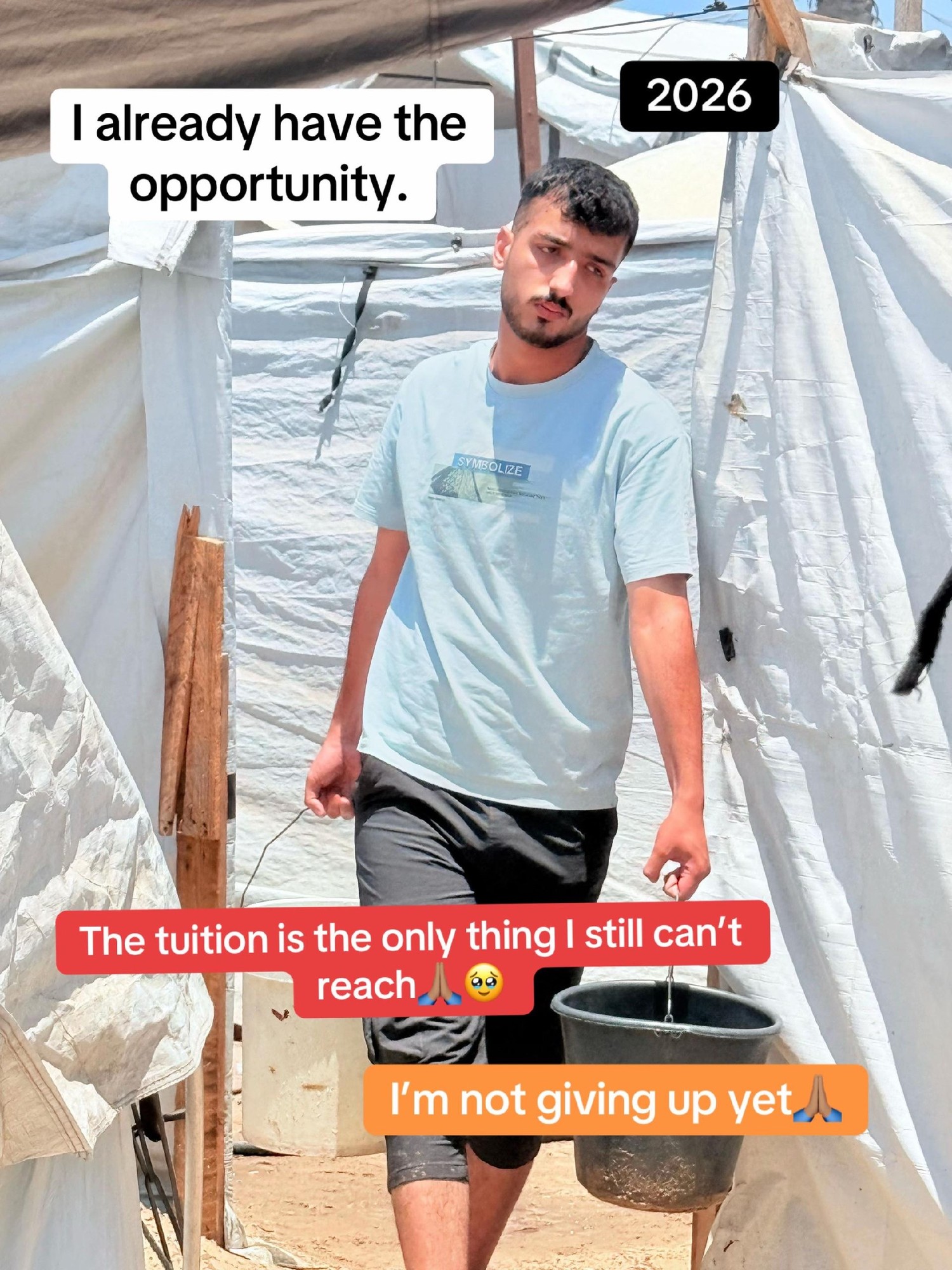
I swear and testify that I am truthful in every word I say, and that I am in desperate need of your help.
submitted by soliman_ayman to news
2 points | 5 comments
cross-posted from: anarchist.nexus/…/i-swear-and-testify-that-i-am-t…
I swear and testify that I am truthful in every word I say, and that I am in desperate need of your help. Before the war, my dream was simple: I wanted to continue my education, build a future, and one day be able to support my parents, my brother, and my sister. Like millions of young people around the world, I believed that with hard work, determination, and education, I could build a better life.
Then the war came and everything changed.
For nearly three years, my family and I have been living in a displacement camp. Every day has become a struggle just to survive:
Severe Heat: The summer heat inside our tent is unbearable, turning it into an oven during the day making it difficult to sleep or rest.
Water Scarcity: Clean water is extremely difficult to find, requiring long walks carrying heavy buckets. Every liter matters.
Food Shortages: Food is scarce and basic items have become far too expensive.
Medical Care: Healthcare is extremely limited, making even simple illnesses frightening.
Despite everything, I still refuse to give up. I have received an acceptance from the University of Glasgow. For me, this is more than an academic opportunity—it is a dream I have carried for years to study in Europe, gain knowledge, build a career, and return that opportunity to my family by creating a better future for them.
Financial Requirements:
Tuition Fees (University of Glasgow): £33,000
I am not asking for a luxury life. I am asking for a chance: a chance to study, to rebuild my life, to support my parents after everything they have endured, and to give my younger siblings hope that our future can still be different.
How You Can Support:
GoFundMe Campaign: www.gofundme.com/f/surviving-an-onslaught
Bitcoin (BTC) Address: 15hhENX79tZy7MSxSJekewhdSN8jh92kRr
TRON (TRC20) Address: TBjNGTPXxC93wHvj8zyPpyfRciEy2Qykf3
Every donation, no matter how small, brings us one step closer to education, stability, and dignity. If you are unable to donate, please consider sharing this story. One share could reach someone who can make a difference.
Thank you for taking the time to read my story and for giving us hope when hope feels so far away.
With gratitude,
Soliman

 beehaw.org
 -
Romanian parliament rejects pro-EU PM candidate
submitted by petrescatraian to newsbeehaw.org
7 points | 0 comments
https://www.rfi.fr/en/international-news/20260930-romanian-parliament-rejects-pro-eu-pm-candidate-amid-political-deadlock -
A Near-Disaster on Flydubai
submitted by Powderhorn to newsbeehaw.org
3 points | 1 comments
https://www.theatlantic.com/ideas/2026/09/flydubai-plane-attack-israel/688848/I’m sure everyone has heard about this, but as nothing has been posted, I thought I’d provide this take. It’s a great analysis, and the writing is chef’s kiss.
Today, somewhere over Saudi Arabia, the co-pilot of an Israel-bound Flydubai Boeing 737 stabbed the other pilot and pitched the nose of the plane toward the desert below. The jet descended 17,000 feet in two minutes, at an acceleration violent enough to make your phone and in-flight snack jump off your tray and be pinned to the ceiling. Other crew members and at least one Israeli passenger broke into the cockpit and subdued the assailant. Relief pilots then took over and landed the plane in Tabuk, Saudi Arabia. After a second Flydubai plane took the 174 passengers to Tel Aviv, one of the passengers who’d stormed the cockpit told Israeli Prime Minister Benjamin Netanyahu that his actions had been effective in part because he had watched the disaster-porn documentary series Mayday, about aviation catastrophes, and had known to pull back on the yoke.
Whether today’s near-disaster was terrorism or merely attempted mass murder depends on the attacker’s motive. Either way, it is a public-relations catastrophe for Flydubai, the budget cousin of the airline Emirates. Since the United Arab Emirates opened diplomatic relations with Israel in 2020, the airline has connected the two countries with few interruptions, even for acts of war and terror. Keeping that air route open and safe has taken a great deal of effort. Last year, I witnessed clever security engineering at Dubai’s Terminal 1: placement of the check-in desk for El Al, the Israeli carrier, adjacent to the desk for Iran’s Mahan Air. Anyone tempted to attack Israeli passengers would hit Iranian ones, and vice versa. Checked baggage costs extra, but the experience of being a human shield while waiting in line is complimentary.
-
Trump's Diesel Export Ban, Explained
submitted by papertrail_geo to newsbeehaw.org
3 points | 1 comments
https://youtu.be/IndnkIJMHUUA diesel export ban, floated then walked back. What it does to fuel prices.
Full episode on Paper Trail: www.youtube.com/@papertrailgeo Subscribe for the paperwork behind the headlines. Sources listed in the video.
-
Trump Rejects Iran's Hormuz Deal
submitted by papertrail_geo to newsbeehaw.org
4 points | 0 comments
https://youtu.be/3vDWibsjIzUIran floated a deal over the Strait of Hormuz. Trump said no. Follow the strait, not the headline.
Full episode on Paper Trail: www.youtube.com/@papertrailgeo Subscribe for the paperwork behind the headlines. Sources listed in the video.
-
The Ryazan Bombings and Putin's Rise
submitted by papertrail_geo to newsbeehaw.org
4 points | 0 comments
https://youtu.be/aMlOc-6rXbsThe 1999 apartment bombings that made Putin, and the story that still does not add up.
Full episode on Paper Trail: www.youtube.com/@papertrailgeo Subscribe for the paperwork behind the headlines. Sources listed in the video.
-
Vladimir Putin: How He Took Russia, One Rival at a Time
submitted by papertrail_geo to newsbeehaw.org
4 points | 0 comments
https://youtu.be/DaJarA-bpfAHow a mid-level KGB officer ended up owning every rival who underestimated him. The ladder, step by step.
Full episode on Paper Trail: www.youtube.com/@papertrailgeo Subscribe for the paperwork behind the headlines. Sources listed in the video.
-
India frees US citizen VanDyke, six Ukrainians after six months in jail
submitted by n7gifmdn to newsbeehaw.org
7 points | 0 comments
https://www.aljazeera.com/news/2026/9/28/american-and-six-ukrainians-released-by-india-after-six-months-in-jail -
Cuba Under Siege - In These Times
submitted by fu to newsbeehaw.org
14 points | 1 commentsCuba Under Siege - In These Times
inthesetimes.com/article/cuba-… -
Passport Control: How Myanmar’s military regime tracks down dissidents abroad.
submitted by alyaza to newsbeehaw.org
10 points | 0 comments
https://www.thedial.world/articles/news/myanmar-junta-passport-restrictionsHnin Aye sat listening with growing concern as the officer called out numbers at the Myanmar embassy in Bangkok. “Why are they skipping me?” she thought. A former schoolteacher, she was waiting to get her passport renewed so she could stay in Thailand where she now lived and studied. A denied renewal could lead to imprisonment in Bangkok, or worse, being forced to return home.
Finally, when there was no one left in the room, the official told her to approach the desk. “You better call the person who has been assisting you,” he said. Hnin Aye, 33, glanced at her small red passport on the table, which she had submitted to the official earlier. It was her most prized possession. She snatched it and left to call her broker. She got lucky, the broker told her later; the embassy officials could have simply canceled her passport.
Hnin Aye is one of hundreds of thousands of civil servants who went on strike after the Myanmar military seized power in a coup in February 2021, overthrowing the democratically elected government. (Hnin Aye is a pseudonym.) The mass strike, known as the Civil Disobedience Movement (CDM), hoped to topple the regime through non-violence. The strike has undermined the junta’s ability to provide public services. Many hospitals and most public schools were completely shut following the coup, and many remain closed today, while others limp on with limited capacity. After the political crisis escalated to civil war, some who quit their jobs as part of the strike became civil servants in rebel territories, which are ruled through a patchwork of decentralized governments. Others fled the country entirely to escape persecution and to find new work as the economy collapsed.
Hnin Aye is one of an estimated 4 million Myanmar people living in Thailand, roughly half of whom crossed the border in 2023 and the first half of 2024 alone. She’s been able to live relatively freely in Thailand, attending university and traveling for conferences and academic workshops. But her seemingly normal life is clouded by constant anxiety over the possibility of being sent back home.
The junta has tried to compel civil servants living in Myanmar to come back to work. It has threatened family members of dissidents, expelled strike participants from government housing and even brutally murdered some. (In 2022, a teacher was publicly beheaded by the junta in central Myanmar, where resistance to the military is fierce.) The junta promises amnesty, but most greet this with skepticism.
The military has exerted pressure on those outside the country through their passports. Myanmar passports are only valid for five years, which means that anyone who applied for a travel document right after the coup in 2021, including Hnin Aye, must now get it renewed. Many choose to make use of a corrupt brokerage system, where people with connections in the foreign ministry and other regime appendages facilitate large bribes for new, and sometimes fake, documentation. But it is by no means a guarantee, especially as the junta expands a digitalized system to track, restrict and repress its citizens. Identity and statehood have become a new weapon.
-
Could Iran reopen Hormuz in seven days? The terms come first — crude moved on the sequencing, not the settlement
submitted by papertrail_geo to newsbeehaw.org
2 points | 0 comments
https://www.youtube.com/watch?v=cRiroBf85VgEvery figure comes from the primary record: the sovereignty filings and UN resolutions, the shipping and pipeline volumes, the contracting and the insurance pricing that decides what actually moves. Built for people who want the paperwork, not the framing. Full breakdown: www.youtube.com/watch?v=cRiroBf85Vg
-
2 Climbers Found Dead on Russia’s Second-Highest Mountain Peak
submitted by petrescatraian to newsbeehaw.org
6 points | 0 comments
https://www.themoscowtimes.com/2026/09/23/2-climbers-found-dead-on-russias-second-highest-mountain-peak-a93776 -
The Middle Powers Are Now the “Free World”
submitted by petrescatraian to newsbeehaw.org
24 points | 6 comments
https://www.project-syndicate.org/commentary/middle-powers-are-the-free-world-by-michael-ignatieff-2026-09 -
Germany launches construction of fast-charging motorway network for trucks
submitted by alyaza to newsbeehaw.org
21 points | 5 comments
https://www.cleanenergywire.org/news/germany-launches-construction-fast-charging-motorway-network-trucks